

NEWS
|
EU Battery Regulation Information(CR2025)EU Battery Regulation Information (CR2025) CR2025 Lithium-Manganese Coin Cell (Non-rechargeable) This CR2025 lithium-Manganese coin cell (non-rechargeable) complies with Regulation (EU) 2023/1542. Manufacturer: Shenzhen Deanda Technology Co., Ltd.
1. General Information of CR2025
Battery Name: Lithium-Manganese Coin Cell (Non-rechargeable) Category: Portable battery Chemistry System: Lithium-Manganese Dioxide Model: CR2025 Nominal Voltage: 3.0 V Shelf Life: Retain 98 % of initial capacity within one‑year upon delivery under normal storage conditions. Country of Origin: China Approximate Weight: 2.3~2.6 g (for reference only) Trademark/Brand: Neutral brand Production Date: Printed on the negative terminal of the battery upon customer’s request in the format: Year‑Month Examples: 64 = 2026-04, 6X = 2026-10, 6Y = 2026-11, 6Z = 2026-12
2. Manufacturer Manufacturer Name: Shenzhen Deanda Technology Co., Ltd. Address: No.69 Humei Street, Dashuling, Xiaojinkou, Huicheng District, Huizhou City, Guangdong Province, China Postal Code: 516023 Website: http://www.szdeanda.com E-mail:lizj@desaypow.com
3. EU Authorised Representative
Representative: TOP PLUS SOLUTION LTD Address: 14 Avenue du General de Gaulle,94160 ST MANDE,VAL DE MARNE,FR(France) Contact Person: Cameron Lim E-mail: topplussolutionltd@hotmail.com Telephone: +33-773 173 501
4. Battery Characteristic Data (1) Capacity: 150 mAh, 0.45 Wh, operating 750 hours; application runtime: 13.0 hours Capacity & MAD test condition: 15kΩ continuously to 2.0V , 20±2℃ Application-Electronic key: 10mA 5s on, 55s off 24h/day to 1.8V , 20±2℃
(2) Capacity Test Condition: Continuous discharge at 15 kΩ down to 2.0 V ,20±2 °C (3) Application for electronic key: 10mA for 5second ON, 55second OFF, 24hours per day, down to 1.8 V, 20±2 °C
5. Hazardous Substance Compliance Statement This product meets the heavy metal concentration limits specified in Annex I of Regulation (EU) 2023/1542:
- Mercury (Hg): ≤ 0.0005 % by weight - Cadmium (Cd): ≤ 0.002 % by weight (portable batteries only) - Lead (Pb): ≤ 0.01 % by weight (portable batteries only)
This product complies with applicable restrictions of REACH Regulation (EC) No 1907/2006 Annex XVII. This product complies with EU POPs Regulation (EU) 2019/1021.
It contains Ethylene Glycol Dimethyl Ether (EGDME, CAS 110-71-4) above 0.1 % by weight, which is listed in the REACH SVHC Candidate List. EGDME is an essential substance in lithium-battery electrolytes, and no viable alternative is currently available.
6. Suitable Fire extinguishing Agents
Large volumes of water, dry chemical powder or carbon dioxide.
7. Key Raw Materials
Lithium, Manganese, Graphite
8.
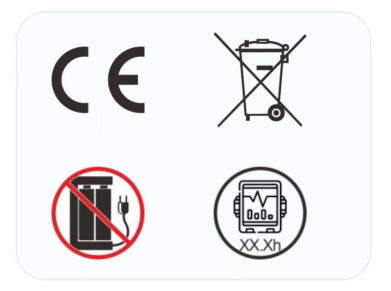
(CE marking; crossed-out wheeled-bin symbol; no-charging prohibition symbol; electronic key runtime symbol)
9. Battery Warnings Keep batteries out of reach of children.
10. ⚠ Warnings
- This battery is non-rechargeable. Attempting to charge it may cause electrolyte leakage or equipment damage. - Observe correct positive (+) and negative (−) polarity during installation; incorrect polarity may lead to unintended charging or over discharge. - Do not short circuit, heat, throw into fire or disassemble the battery. - Forced discharge is prohibited. Excessive internal gas generation may result in swelling, leakage or explosion. - Do not mix old and new batteries. Replace all batteries with identical brand and model units during replacement. - Remove exhausted batteries from battery compartments to avoid over discharge which causes leakage and equipment damage. - Direct soldering on the battery is forbidden, as it will damage the battery. - Keep batteries out of children’s reach to prevent accidental swallowing. Seek immediate medical help if ingestion occurs. - Do not disassemble or deform the battery. - Do not store or carry batteries together with metallic objects (e.g. keys, coins) to prevent short‑circuiting. - Do not immerse batteries in water or expose them to high humidity environments. - Do not modify or directly solder the battery. - In case of battery leakage, avoid skin and eye contact. If contact occurs, rinse thoroughly with plenty of clean water and seek medical assistance.
11. Notes
- If leaked battery material gets into eyes, flush continuously with running water for at least 15 minutes and consult an ophthalmologist immediately. - Upon detecting unusual phenomena such as odour, heating, discolouration or deformation during use or storage, remove the battery from the device immediately and dispose of it properly. - Do not mix batteries of different types, brands or largely‑varying capacities. - Avoid exposure to extreme high temperatures (e.g. direct sunlight, near radiators).
12. Waste Prevention and Management Information for Primary Disposable Batteries
In compliance with EU Battery Regulation and Waste Framework Directive, producers or their Extended Producer Responsibility organisations supplying disposable (non-rechargeable) primary batteries within EU Member States shall provide the following information for end‑users and distributors:
(a) Role of end users in waste prevention
Use batteries in accordance with equipment manufacturer instructions. Avoid storage or operation under extreme temperatures or high humidity. Remove batteries from devices that will not be used for long periods to prevent leakage or unintended discharge. Primary batteries cannot be recharged; never attempt charging, otherwise leakage or rupture may occur. Upon depletion, users are encouraged to deliver spent batteries to designated collection points for potential material recovery and recycling.
(b) Role of end‑users in separate collection (Article 64)
End users are obligated to separate waste batteries from other household waste. Do not discard batteries in unsorted municipal waste or litter them. Separate collection enables proper treatment and recovery of resources (e.g. zinc, manganese, steel, lithium), supporting EU environmental objectives.
(c) Separate collection, recycling points, preparation for reuse and treatment
Spent batteries can be recycled via: collection bins at retail outlets, municipal recycling centres, designated battery collection points. Collected batteries undergo sorting, pretreatment (including electrolyte neutralisation) and material recovery. Reuse or preparation for reuse generally does not apply to primary batteries; maximum material recovery shall be pursued.
(d) Safety instructions for waste‑battery handling
Avoid storing waste batteries alongside metallic items to prevent short circuiting. If batteries show leakage (e.g. white crystalline residues), deformation or overheating signs, wear protective gloves and store them individually inside plastic bags. Never throw batteries into fire, which may trigger explosion or release hazardous fumes. Keep batteries away from children; obtain urgent medical care in case of ingestion.
(e) Meaning of labels and symbols (Article 13)
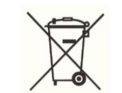
- Crossed out wheeled bin symbol: Indicates batteries must not enter unsorted municipal waste and require separate collection.
- CE marking: Signifies that the battery (or the device it is intended for) satisfies applicable EU health, safety and environmental‑protection requirements.
- Symbol for “keep away from children”: Warns against risks of accidental swallowing or improper handling, especially for children.
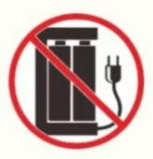
- No-charging symbol: Denotes a non-rechargeable battery; charging attempts may lead to leakage or explosion.
(f) Impacts of substances on environment and human health
Primary batteries contain materials including zinc, manganese and lithium. Improper disposal (e.g. landfilling or incineration) may cause electrolyte leakage resulting in soil and water contamination, and heavy metal accumulation in the environment. Battery ingestion can cause bodily harm; keep out of children’s reach. Inadequate disposal increases environmental burden, wastes recyclable resources and may cause fire or injury during waste‑treatment operations. Leaking batteries can produce chemical burns; handle with caution.
This information supports end users in responsible battery usage and disposal in accordance with EU waste‑related legislation.
13. Declaration of Conformity
The above stated information complies with Regulation (EU) 2023/1542 of the European Parliament and of the Council of 12 July 2023 on battery sustainability, safety and labelling/information. Upon assessment, the battery fulfils enforceable requirements under Articles 6 and 13 of this Regulation.
Supplier Responsibility Statement: We acknowledge that OEMs incorporating this battery, or parties supplying the battery as a replacement part within the European Economic Area (EEA), bear responsibility for preparing the Declaration of Conformity (DOC) and Technical Documentation File (TDC). As a battery supplier under Article 39, we provide the information contained within this document to our customers acting as manufacturers for their support.
Disclaimer: The above mentioned information is provided by Deanda based on existing product characteristics and EU regulatory requirements. Contents may be modified to reflect regulatory updates or product property changes. The company reserves the right to revise this document without prior notice.
14. Relevant Documents
Declaration of Conformity (DOC), Technical Documentation File (TDC), full battery list.
Manufacturer Name: Shenzhen Deanda Technology Co., Ltd. Address: No.69 Humei Street, Dashuling, Xiaojinkou, Huicheng District, Huizhou City, Guangdong Province, China E‑mail:lizj@desaypow.com |